Dober Partners is the Brussels executive search firm behind the BestinBrussels survey. For more than thirty years its founder, Mark Dober, has worked in and around EU public affairs, and he saw the same pattern in hiring: the profession has no shared language for what makes someone good at it, so appointments are judged on years in Brussels and the size of a network. Together with Mark we turned his method into a model, a report and a film. This is how it came together.
Influence, built layer by layer
To launch the guide we made a film that builds the pyramid in the same order as the model: knowledge, hard skills, trust, judgement and leadership, one layer at a time. It ends on the report and on the invitation to download it.
From thirty years of search practice to five layers
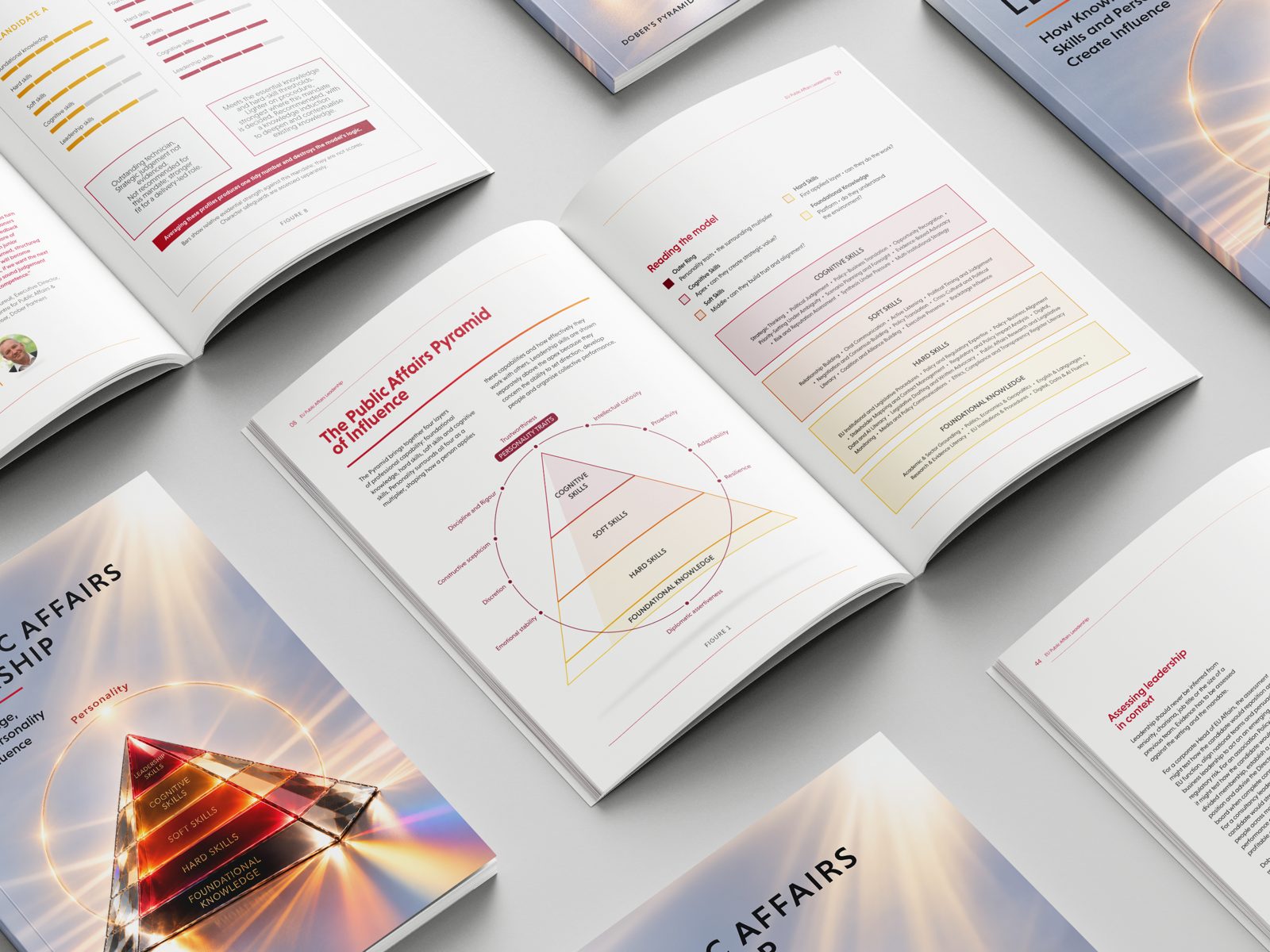
Mark’s point was simple: the usual indicators measure exposure, not capability. With his notes and the BestinBrussels 2026 Survey we looked for the smallest model that could explain a good public affairs professional. It settled on five layers of evidence, foundational knowledge, hard skills, soft skills, cognitive skills and leadership, with personality running through all of them as a multiplier. We redrew it several times in two weeks, in September, until it could be read in one glance. Then we gave it a body: a transparent glass pyramid in which each layer has its own colour and light passes through it, wrapped in a ring for personality.
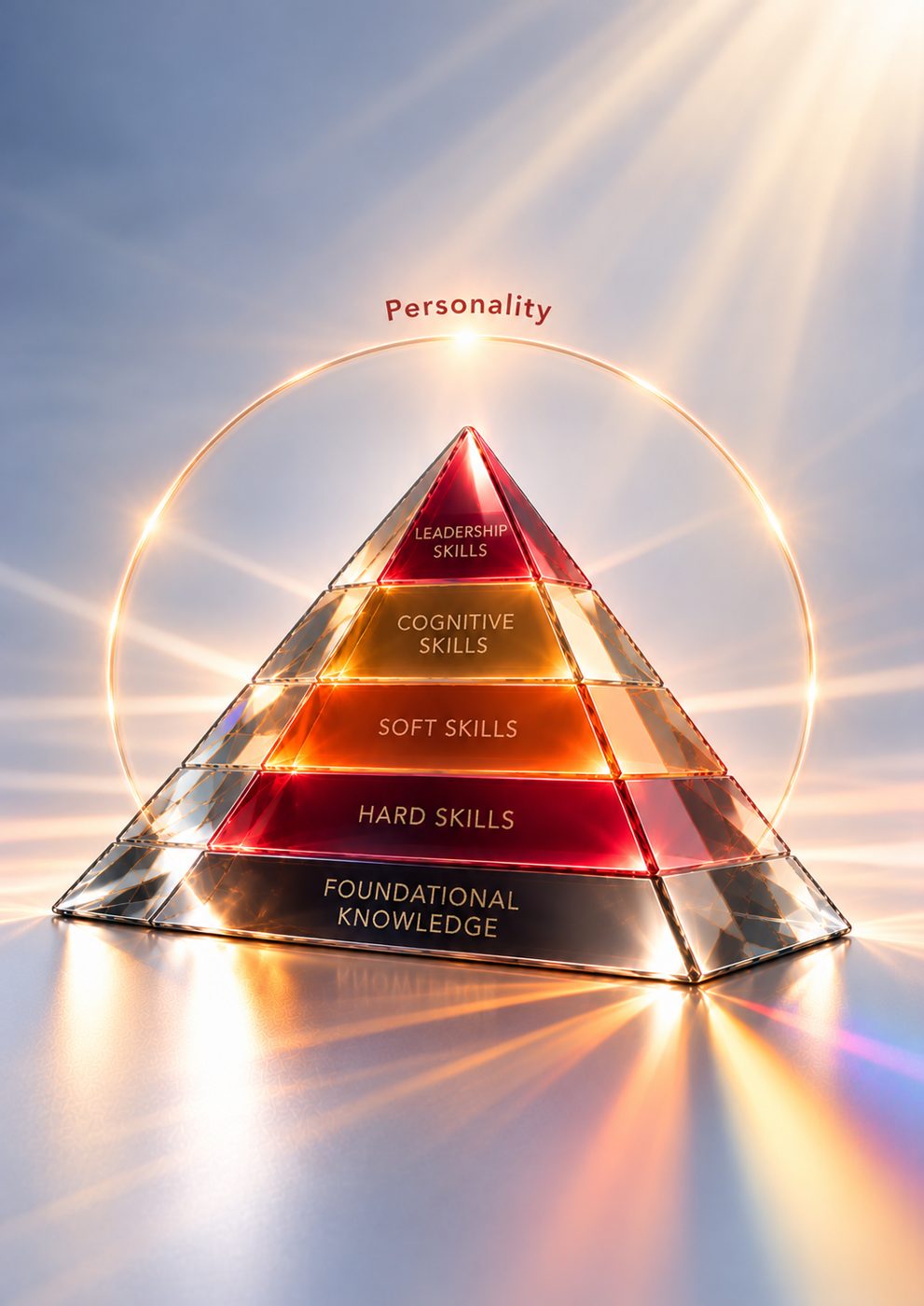
A guide that reads like a tool
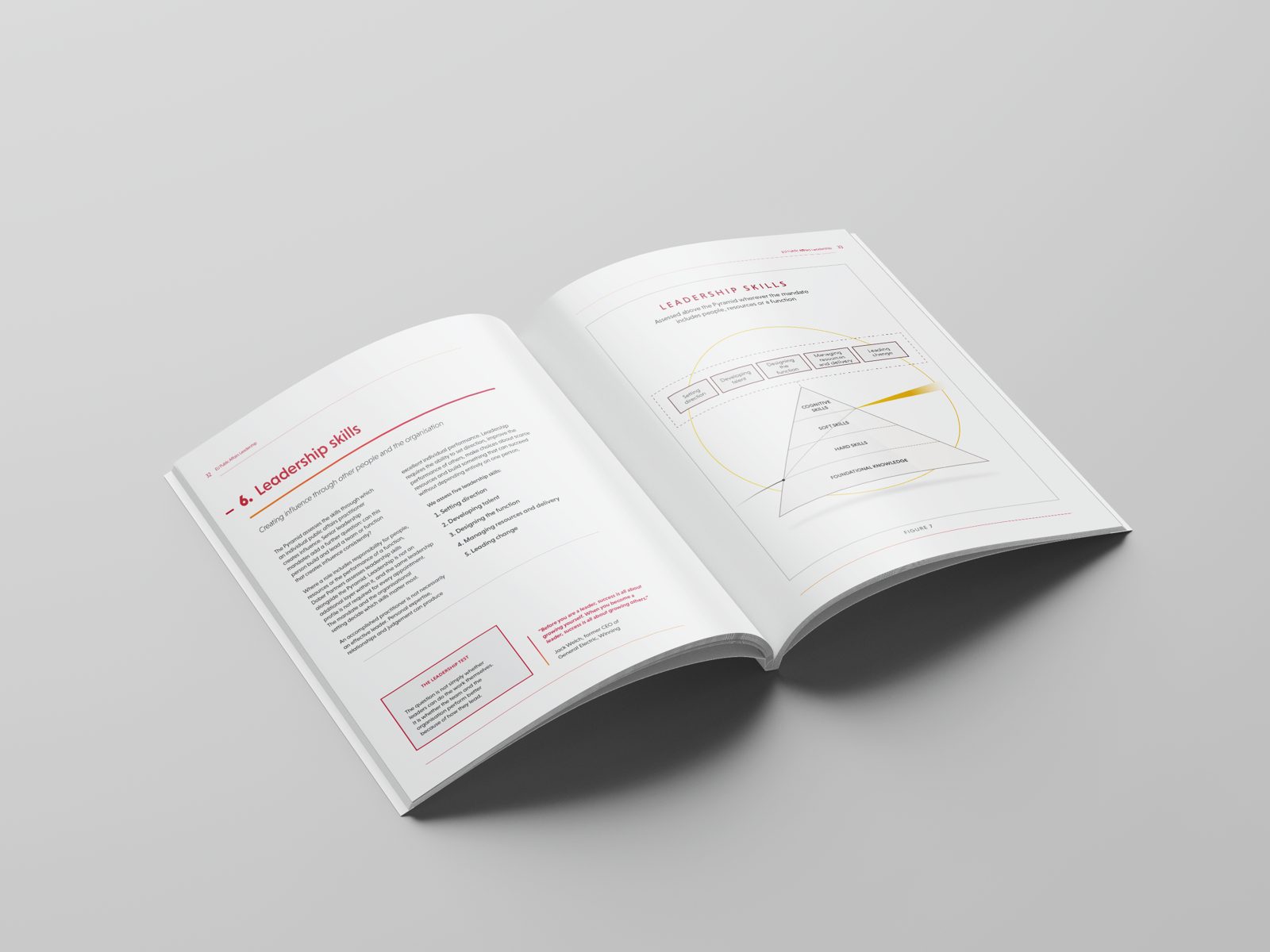
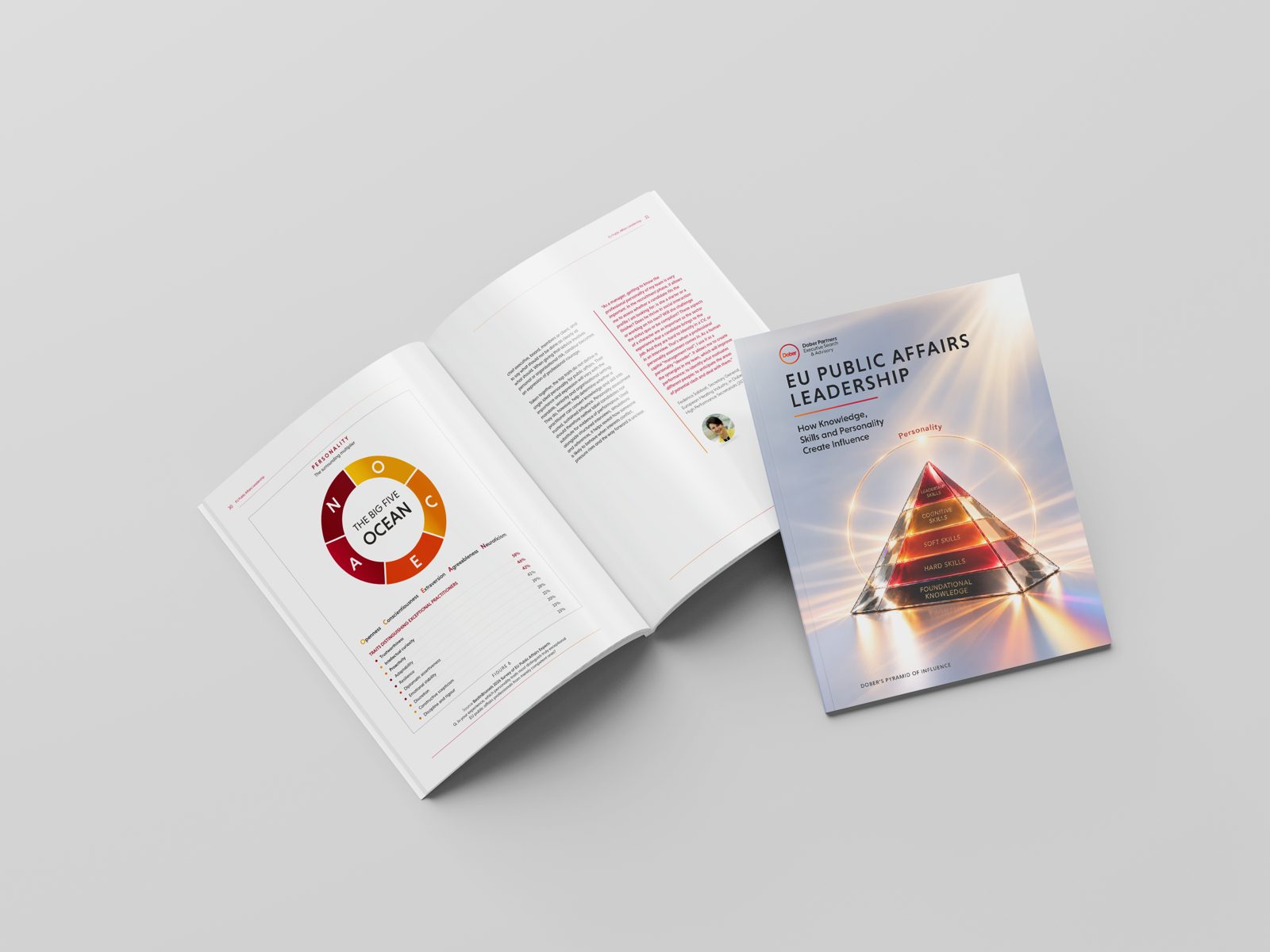
The report keeps the pyramid as its visual spine: a clean two-column layout, a red and gold palette taken from the layers, diagrams that can be read at a glance, and portraits of the people quoted. We worked through fifteen numbered drafts, from the first layout on 28 September to the final files on 2 November, with print and screen versions. Here is the brochure, from the cover to the spreads.
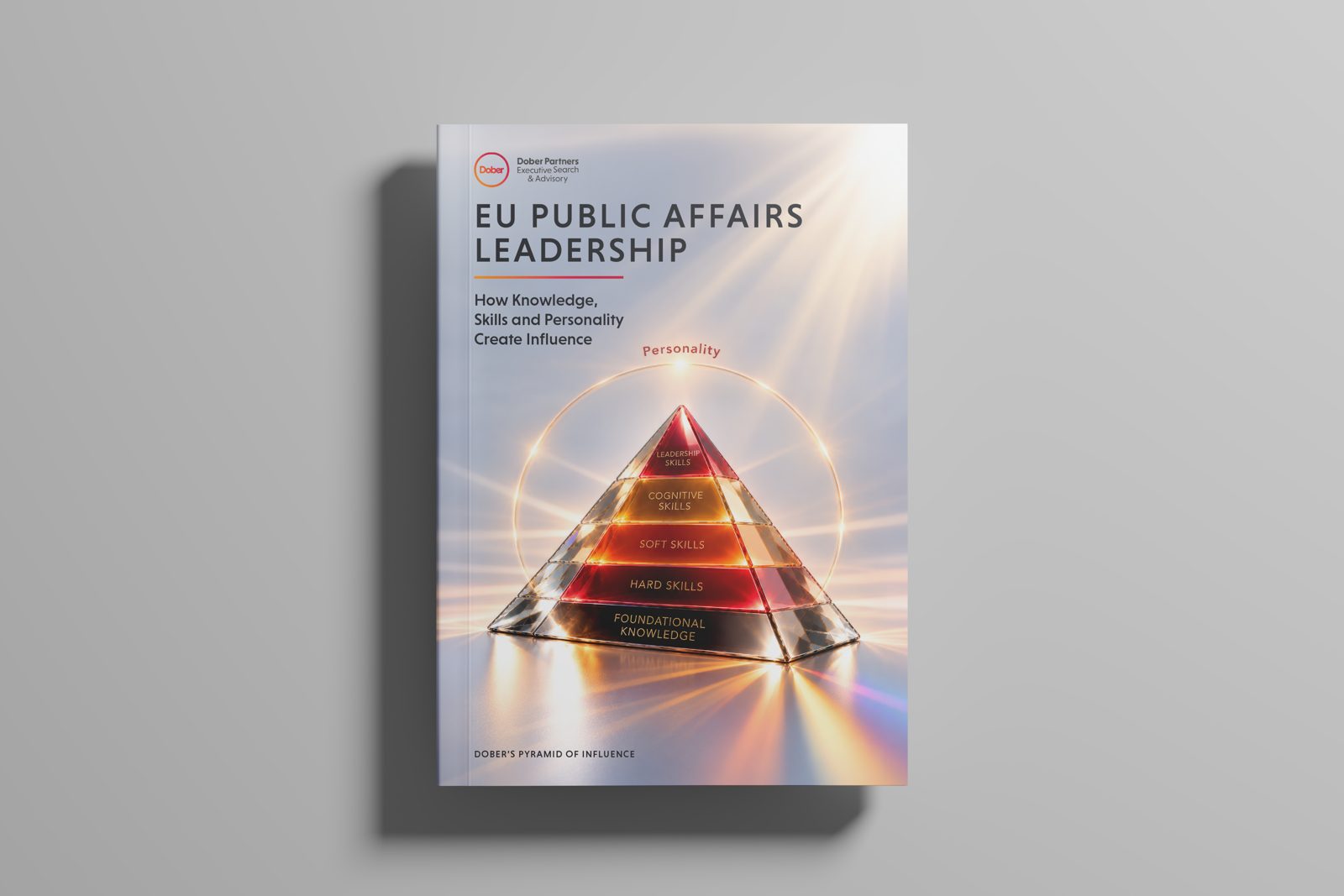
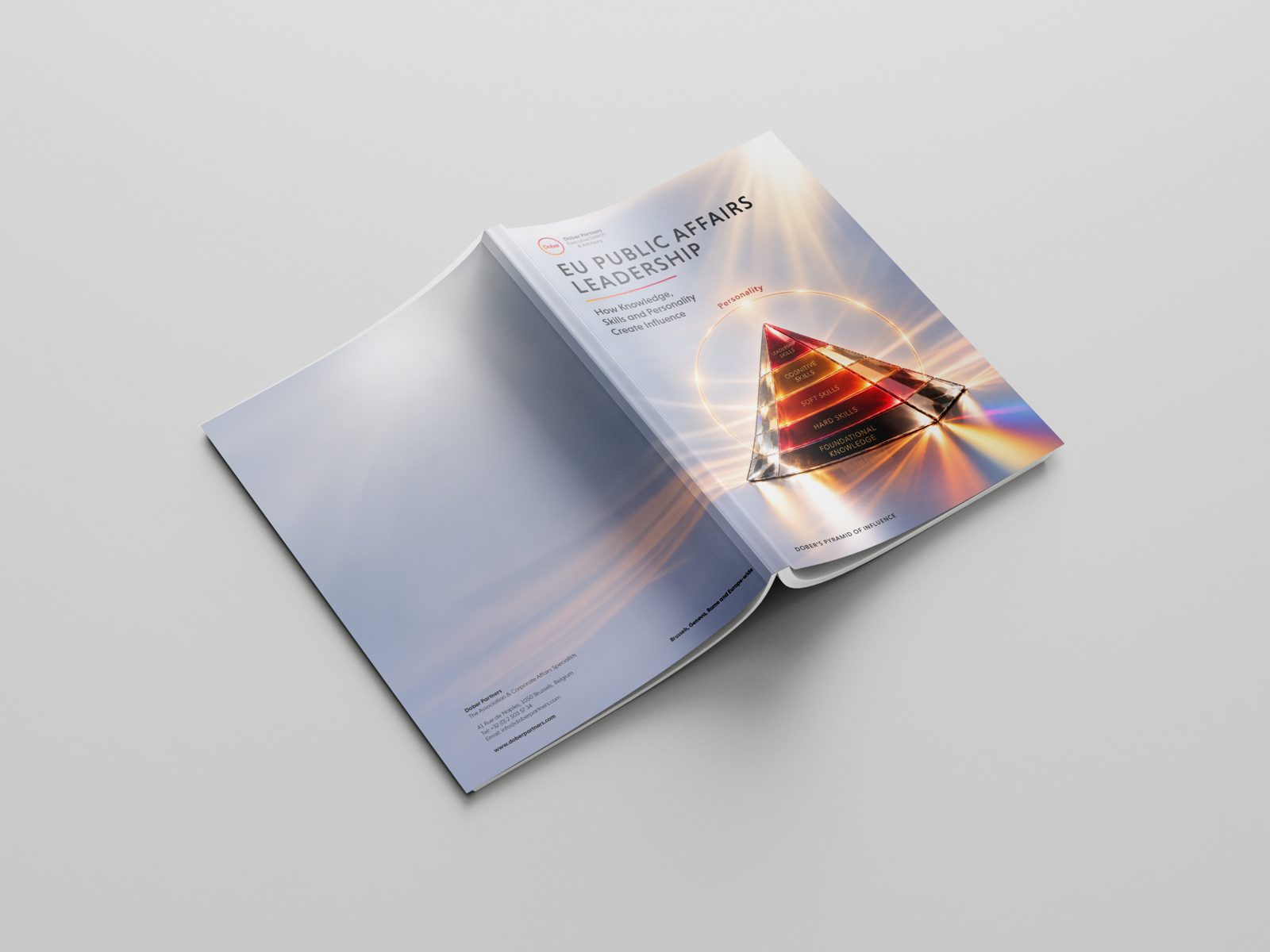
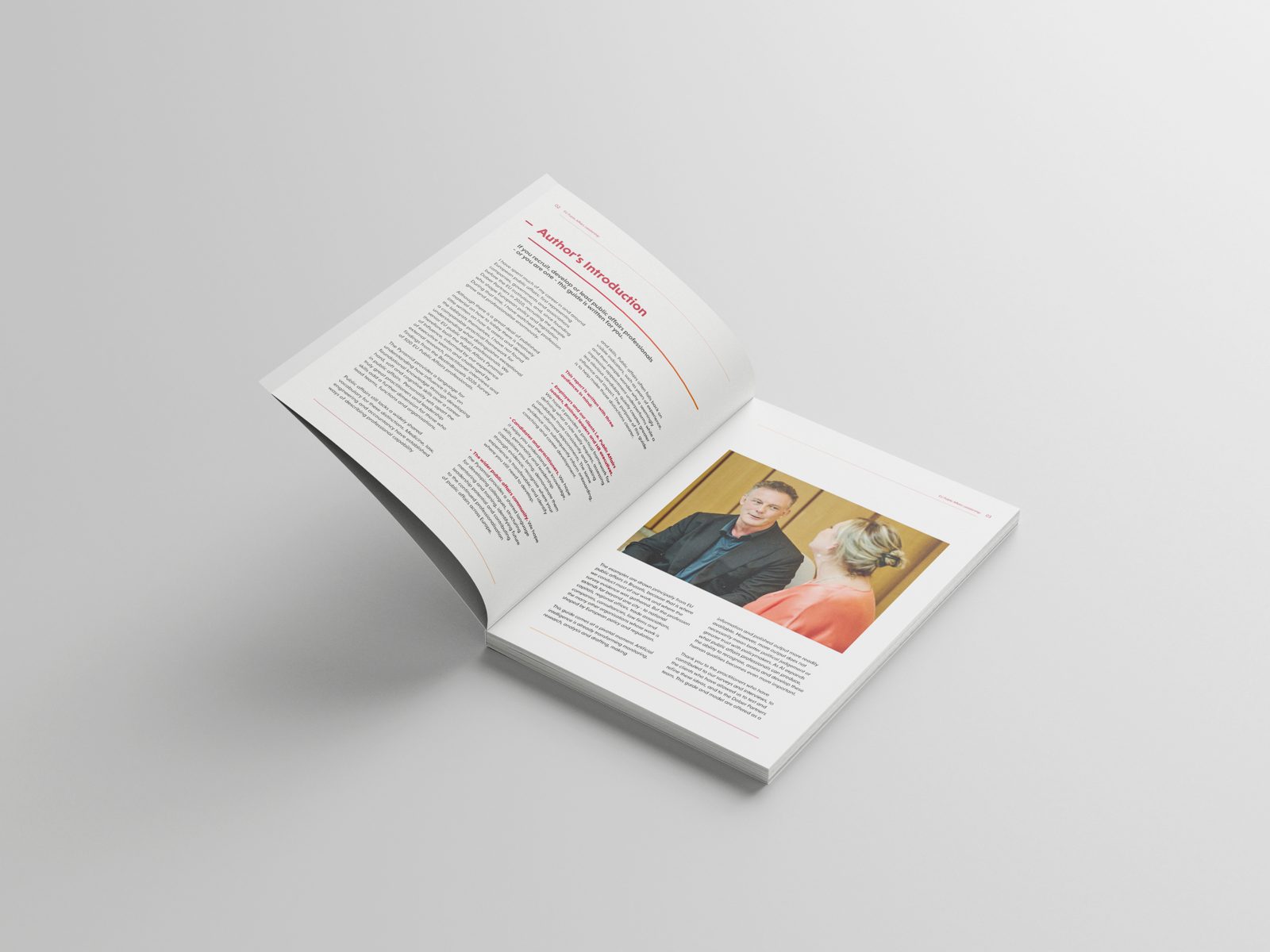
What is inside
The guide shows how the Public Affairs Pyramid of Influence is used to assess senior EU public affairs candidates across five layers of evidence, with a separate leadership module. It is built on the BestinBrussels 2026 Survey and on Dober Partners’ executive search practice, and it is written for clients who recruit, for candidates who want to know how they are assessed, and for the wider public affairs community.
The pyramid on the big screen
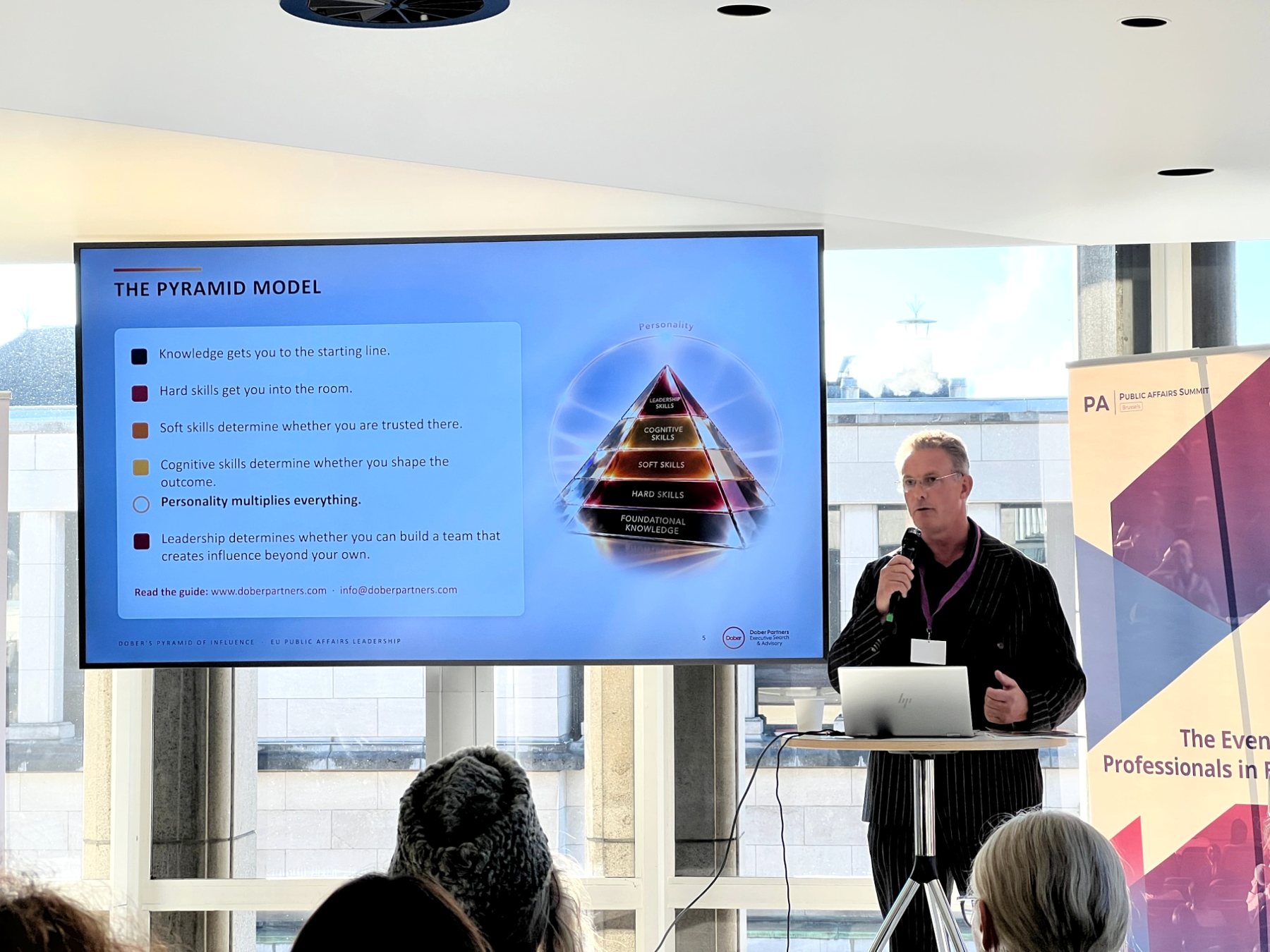
Mark presented the model at the Public Affairs Summit in Brussels. The slide carries the same glass pyramid as the cover, with the layers spelled out: knowledge gets you to the starting line, hard skills get you into the room, soft skills decide whether you are trusted there, and cognitive skills whether you shape the outcome.
Do you have research or a method that deserves a model, a report and a launch film of its own? Get in touch!
Let’s turn your research into something people actually read.